Social realism by way of eighties Helsinki; Shadows in Paradise is early, yet masterful Aki Kaurismäki. The film follows Nikander, a garbage collector, as he goes about his day-to-day life, which is as dull as you might expect. He works in a two-man team (under his superior), traveling the city and taking in the trash. By night, he fries a simple dinner or drinks in the local bars. He’s not without ambition though; he is seen learning English at local classes and taking exams competently.
Things take a turn when Nikander meets Ilona, a local cashier at a supermarket. She is as tired and burnt out as Nikander; living on the breadline and leading a humble existence. In other words, the two are a perfect match for romance.
It’s in this relationship that Kaurismäki’s talents are demonstrated. We watch two humans interact in what can be described as a very natural, unassuming, and objective way. To be sure, they are fully-fledged characters with backgrounds, beliefs, and boundaries, even in spite of, or perhaps even because of their proletariat existence. The two have common ground, they have differences, and the relationship both blossoms and fumbles as a result.
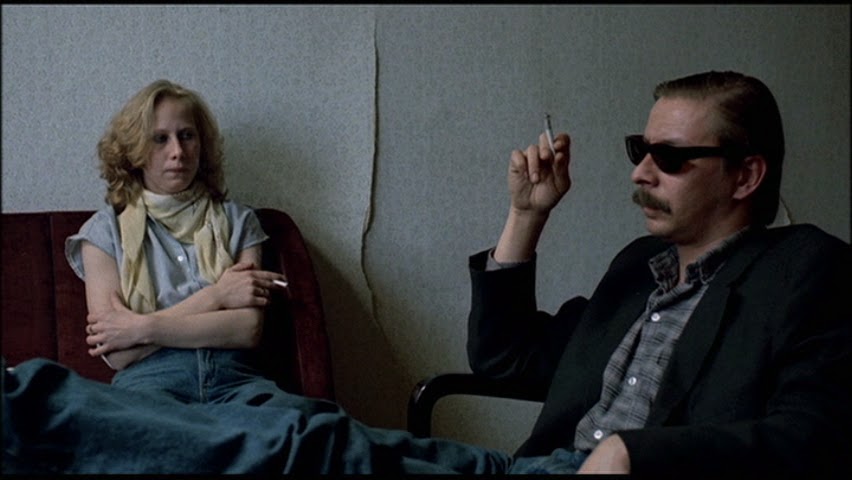
It’s also a very humorous film, in a dry, obtuse way. The dialogue between the two leads is abrupt and robotic, yet maintains characterisation in both the selves and the two.
The urban Helsinki environments, in all their grittiness, are perpetuated with glints of colour, and the film is composed visually with care and attention. Shadows in Paradise is both an exercise in the exploration of the nature of what might be termed common people, and the beauty of their existence. The film’s title is almost its message in reverse, which is probably yet another example of its ironic humour.
1986, Aki Kaurismäki
8.5

 Reverse Lens